
Land Grading Across THE Montrose AREA
Leveling, Slope Correction & Drainage Solutions for Montrose-Area Homes, Ranches & Commercial Sites
Why the Shape of Your Land Matters
Water follows the slope. When ground tilts toward a house, settles around a foundation, or flattens out in the wrong spot, runoff from summer storms and spring snowmelt ends up where it shouldn't. That leads to damp crawl spaces, cracked slabs, washed-out driveways, and eroded hillsides.
El Chapin Excavation grades and reshapes land for homeowners, landowners, builders, and businesses around Montrose. Where grading alone won't handle the water, we add drainage and erosion control to carry it off safely.
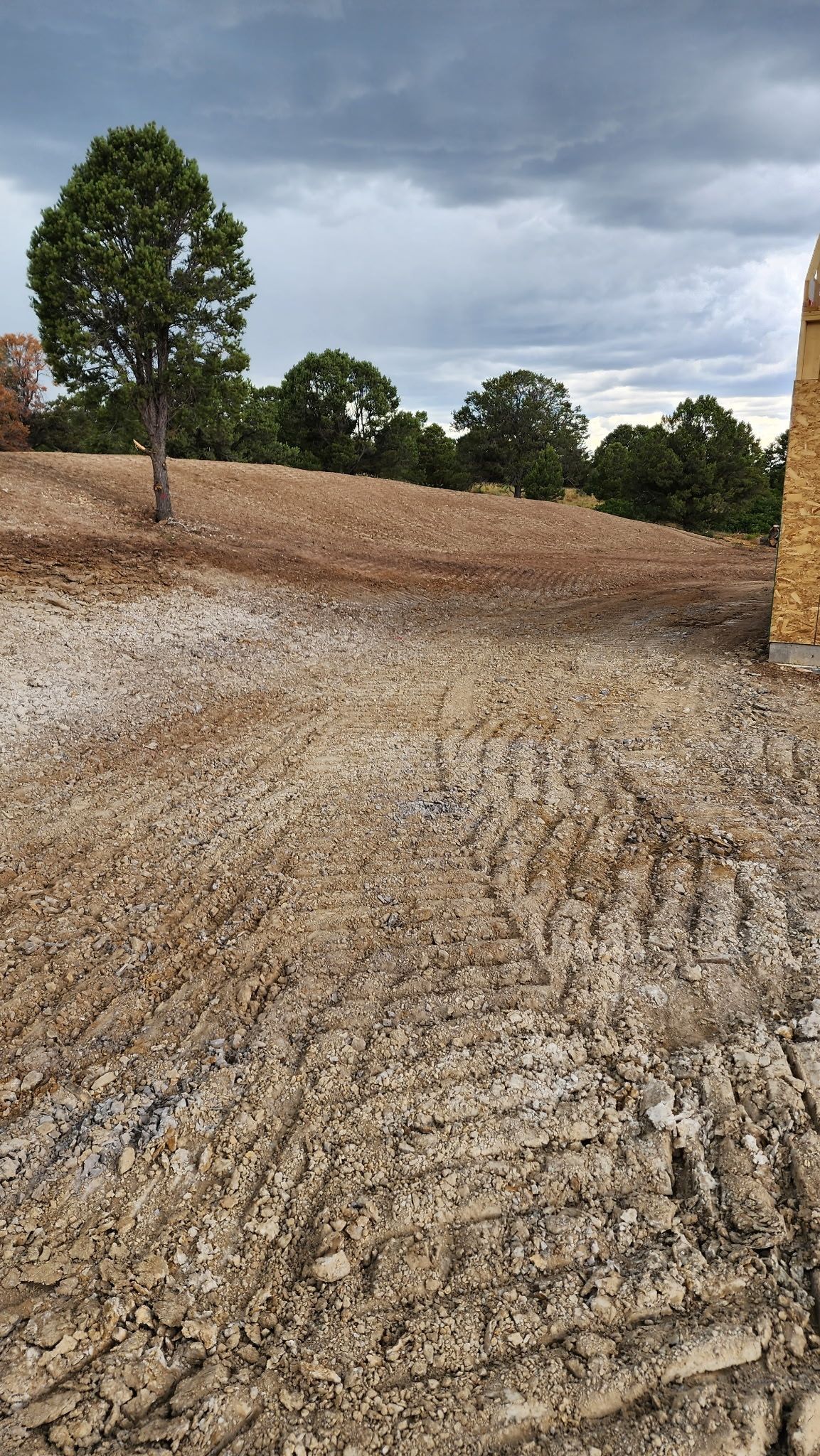
Steps in a Land Grading Project
Drainage Assessment
We look at where water collects, where it's coming from, and where it can safely drain.
Setting Slopes & Elevations
We mark the high and low points and the amount of fall needed to move water away from structures.
Cut & Fill
Soil is moved from high spots to low spots, with fill brought in when the site needs more material.
Drainage & Erosion Control
French drains, culverts, swales, berms, or riprap go in wherever the site calls for them.
Compaction & Finish Grading
The reshaped ground is compacted and smoothed so it's ready for landscaping, gravel, or seed.
Choosing the Right Fix for Drainage Problems
Regrading & Swales
Reshaping the ground and cutting shallow channels to guide surface water away. This is often the first and simplest fix.
French Drains
A gravel-filled trench with perforated pipe that collects water underground and carries it off. Good for soggy spots and along foundations.
Culverts
Pipes under driveways and roads that let water pass from one side to the other without washing out the surface.
Berms & Riprap
Raised earth and placed rock that slow runoff and protect slopes and channels from erosion.
When Your Property Would Need Land Grading
- Water pools near your foundation or in your yard after storms or snowmelt.
- Your crawl space or basement gets damp after it rains.
- Soil around the house has settled and now slopes back toward the walls.
- Your driveway or a hillside is washing out or forming ruts.
- You're getting a yard ready for landscaping or new sod.
Answers About Grading & Drainage
How much slope should land grading have away from a house?
Residential building codes commonly call for the ground to drop at least 6 inches within the first 10 feet from the foundation. Local requirements can vary, so your builder or inspector can confirm what applies.
How much does land grading cost?
Land grading cost depends on the size of the area, how much soil needs to move, whether fill has to be brought in, and what drainage work is added. We look at the property first, then quote the job.
What's the difference between rough grading and finish grading?
Rough grading shapes the land to approximate elevations before construction. Finish grading is the final smoothing after construction that sets up drainage and gets the ground ready for landscaping.
Can land grading fix erosion on a hillside?
Often, yes. Reshaping the slope helps, and berms, riprap, or drainage structures can slow runoff before it carries soil away. Very steep slopes may need an engineered plan.